




GRCC’s Pathways to Prosperity program served adults with low incomes and low educational and basic skill levels in high-poverty areas in Kent County, MI. The program focused on providing services to individuals who were unemployed, had not completed high school, or had been formerly incarcerated. Pathways to Prosperity offered an eight-week course known as Career Prep, occupational training programs that resulted in a GRCC certificate, basic skills courses, and adult basic education and GED courses. Through the Career Prep course, participants earned the Michigan Employability Certificate. The program also provided academic and personal advising to help participants identify barriers, find necessary supportive services, and choose trainings. The program offered all training free of charge and provided transportation assistance and other financial assistance to pay for uniforms or tools. GRCC’s four organizational partners also guided participants on finding employment. Participants attended 3.3 months of coursework and training, on average, and the most commonly attended activity was the Career Prep class. The Pathways to Prosperity program was part of the larger Pathways Out of Poverty grant initiative, which funded 55 training programs in green occupations across the United States. GRCC operated Pathways to Prosperity from January 2010 to July 2012.
- -4.12,1.50
- 5238.00,1.50
- 91.00,2.75
- -4.12,1.50
- 5238.00,1.50
- 91.00,2.75
Summary
Grand Rapids Community College’s (GRCC’s) Pathways to Prosperity program offered occupational training and supportive services to adults with low incomes.
Populations and employment barriers: At least a high school diploma or equivalent
Effectiveness rating and effect by outcome domain
View table definitionsScroll to the right to view the rest of the table columns
| Outcome domain | Term | Effectiveness rating | Effect in 2024 dollars and percentages | Effect in standard deviations | Sample size |
|---|---|---|---|---|---|
| Increase earnings | Short-term | 
|
$0 per year | 0.000 | 0 |
| Long-term |
|
$0 per year | 0.000 | 0 | |
| Very long-term |  |
||||
| Increase employment | Short-term |
|
 8% (in percentage points)
|
0.201 | 274 |
| Long-term |
|
1% (in percentage points)
|
0.023 | 238 | |
| Very long-term | |
||||
| Decrease benefit receipt | Short-term |
|
 $278 per year
|
0.081 | 185 |
| Long-term | |
||||
| Very long-term | |
||||
| Increase education and training | All measurement periods | |
Studies of this program
| Study quality rating | Study counts per rating |
|---|---|
 High High
|
1 |
Implementation details
State(s) where implemented
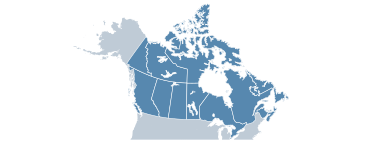
Pathways to Work refers to programs by the names used in study reports or manuscripts. Some program names may use language that is not consistent with our style guide, preferences, or the terminology we use to describe populations.