




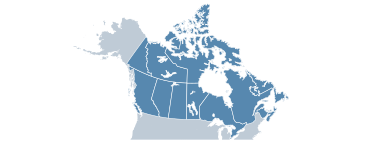
The program provided a life-skills course and internet-based instruction designed to improve math and reading skills to the ninth-grade level. After completing the initial education, participants could enroll in occupational training in certificate courses, including courses in the administrative support, health care, and manufacturing fields. Participants began with a life-skills course that lasted 17 hours, progressed to occupational training courses that lasted between 2.5 and 16 weeks, and finished with 24 hours of career-readiness training. WTA Connect was aimed at adults who were low income and who had math and reading skills at the sixth- to eighth-grade level. This study took place in Des Moines, IA. This study was part of the Pathways for Advancing Careers and Education evaluation.
Summary
WTA Connect offered occupational training, academic advising, and employment services to adults who had low skills in order to prepare them for enrollment in the WTA.
Populations and employment barriers:
Effectiveness rating and effect by outcome domain
View table definitionsScroll to the right to view the rest of the table columns
| Outcome domain | Term | Effectiveness rating | Effect in 2024 dollars and percentages | Effect in standard deviations | Sample size |
|---|---|---|---|---|---|
| Increase earnings | Short-term |  |
|||
| Long-term | 
|
 $620 per year
|
0.017 | 920 | |
| Very long-term | |
||||
| Increase employment | Short-term | |
|||
| Long-term |
|
1% (in percentage points)
|
0.015 | 618 | |
| Very long-term | |
||||
| Decrease benefit receipt | Short-term | |
|||
| Long-term |
|
$-158 per year
|
-0.046 | 695 | |
| Very long-term | |
||||
| Increase education and training | All measurement periods | 
|
7% (in percentage points)
|
0.145 | 668 |
Studies of this program
| Study quality rating | Study counts per rating |
|---|---|
 High High
|
1 |
Implementation details
State(s) where implemented
Pathways to Work refers to programs by the names used in study reports or manuscripts. Some program names may use language that is not consistent with our style guide, preferences, or the terminology we use to describe populations.