




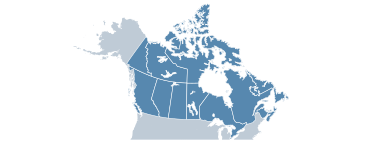
Reach for Success revolved around case managers who recruited participants for the program, connected them with services, and helped them navigate through life crises and job loss. Case managers contacted participants at least once a month and provided individualized counseling to help them navigate new job responsibilities or interpersonal issues (at work or at home) that presented a challenge to their continued employment. Case managers were given a reduced caseload of 40 to 85 cases compared with the typical 100 to 120 cases per case manager. Case managers focused primarily on connecting participants with supportive services (mainly transportation and child care assistance) to help them maintain employment but also connected them with existing employment retention and advancement services as needed. These services included job development for participants who lost their jobs or sought better-paying jobs, as well as soft-skills training, work-based or general education, and career-specific training. Participants received services until they left TANF, or for up to one year if they remained on it. Reach for Success’s target population was volunteer TANF recipients (mostly single mothers) who worked at least 32 hours a week but did not earn enough to leave TANF. Reach for Success was implemented in Los Angeles County. It was evaluated as part of the Employment Retention and Advancement Evaluation.
- 0.05,1.00
- 0.06,1.00
Summary
Reach for Success’s goal was to help Temporary Assistance for Needy Families (TANF) recipients maintain their current employment, secure higher-paying jobs, or rapidly resecure employment after job loss through an individualized case management approach that counseled participants in overcoming challenges to work and connected them to supportive and employment services.
Populations and employment barriers: Public benefits recipients, Cash assistance recipients, Employed, Parents, Single parents
Effectiveness rating and effect by outcome domain
View table definitionsScroll to the right to view the rest of the table columns
| Outcome domain | Term | Effectiveness rating | Effect in 2024 dollars and percentages | Effect in standard deviations | Sample size |
|---|---|---|---|---|---|
| Increase earnings | Short-term | 
|
 $1,968 per year
|
0.054 | 5700 |
| Long-term |
|
$292 per year
|
0.008 | 5700 | |
| Very long-term |  |
||||
| Increase employment | Short-term |
|
2% (in percentage points)
|
0.057 | 5700 |
| Long-term |
|
 0% (in percentage points)
|
-0.007 | 5700 | |
| Very long-term | |
||||
| Decrease benefit receipt | Short-term |
|
$93 per year
|
0.027 | 5700 |
| Long-term |
|
$131 per year
|
0.038 | 5700 | |
| Very long-term | |
||||
| Increase education and training | All measurement periods | |
Studies of this program
| Study quality rating | Study counts per rating |
|---|---|
 High High
|
1 |
Implementation details
State(s) where implemented
Pathways to Work refers to programs by the names used in study reports or manuscripts. Some program names may use language that is not consistent with our style guide, preferences, or the terminology we use to describe populations.