




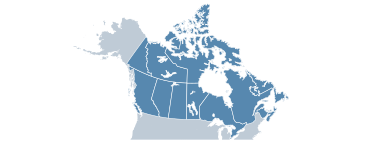
Moving Up participants received case management and additional services aligned to their individual needs. These additional services included pre- or post-employment services, career counseling, job-search help, education and training, and child care and transportation assistance. Moving Up provided incentives when participants achieved employment, education, or training milestones. The number of services participants received and the length of participation varied based on participants’ particular circumstances. Participants were parents who were former TANF participants and had stopped receiving TANF at least nine months before the program started. Moving Up was implemented in six rural counties in northeast South Carolina.
Summary
Moving Up provided case management and tailored employment services to help former Temporary Assistance for Needy Families (TANF) participants find and maintain employment and advance into better jobs.
Populations and employment barriers: Parents
Populations and employment barriers: Parents
Effectiveness rating and effect by outcome domain
View table definitionsScroll to the right to view the rest of the table columns
| Outcome domain | Term | Effectiveness rating | Effect in 2024 dollars and percentages | Effect in standard deviations | Sample size |
|---|---|---|---|---|---|
| Increase earnings | Short-term | 
|
 $146 per year
|
0.004 | 2776 |
| Long-term |
|
 $-328 per year
|
-0.009 | 3035 | |
| Very long-term |  |
||||
| Increase employment | Short-term |
|
2% (in percentage points)
|
0.038 | 2776 |
| Long-term |
|
0% (in percentage points)
|
0.003 | 3035 | |
| Very long-term | |
||||
| Decrease benefit receipt | Short-term |
|
$45 per year
|
0.013 | 2776 |
| Long-term |
|
$62 per year
|
0.018 | 2776 | |
| Very long-term |
|
$-34 per year
|
-0.010 | 1839 | |
| Increase education and training | All measurement periods | |
Studies of this program
| Study quality rating | Study counts per rating |
|---|---|
 High High
|
2 |
Implementation details
State(s) where implemented
Pathways to Work refers to programs by the names used in study reports or manuscripts. Some program names may use language that is not consistent with our style guide, preferences, or the terminology we use to describe populations.