SSP-Plus offered an earnings subsidy to participants who moved into full-time work (at least 30 hours a week) within one year of joining an SSP program. The earnings supplement was equal to half of the difference between participants’ earnings and a benchmark level (set by location and year). The benchmark marked the point when a typical single-parent family was earning more from full-time employment than from Income Assistance, and the payment increased income by about $3,000 to $7,000 (Canadian) per year for most participating families but could double income for those earning the minimum wage. In addition, participants could participate in a variety of job search and employment services, such as assistance with creating an employment plan, help with crafting a resume or job leads, membership in a job club, job coaching, and self-esteem and other workshops designed to help participants overcome joblessness and find gainful employment.
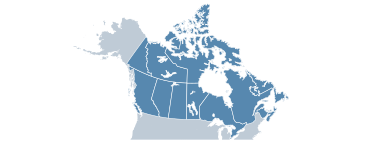
Participants were permanently ineligible for the earnings subsidy if they did not attain full-time work within one year of joining SSP-Plus. Those who did find full-time employment within one year were eligible to receive the subsidy for up to three years after attaining employment so long as they maintained full-time employment and did not receive Income Assistance payments during that time. Program participants could continue to receive employment services after they obtained their subsidy, regardless of whether they remained at the job that qualified them for the subsidy. SSP-Plus participants were single parents in New Brunswick, Canada, that had received Canadian Income Assistance for at least one year. SSP-Plus was one of a group of similar programs examined in the SSP Evaluation, which also tested SSP and the comparison of SSP to SSP-Plus. SSP-Plus was only implemented in New Brunswick.


 High
High