




TANF recipients participating in the Transitional Community Jobs Program worked with staff at program intake to assess employment barriers and completed a drug test and basic education assessment. Those with substance use disorders were referred for substance use treatment before resuming the program. After intake, participants attended mandatory job-skills classes, which addressed work-appropriate soft skills. They also participated in weekly meetings with program staff to develop a plan to obtain employment and pursue opportunities identified by job developers. In addition, participants attended regular peer-led meetings to develop life skills, including financial and time management. Participants were then placed in a six-month, subsidized transitional job within Catholic Charities. They were paid minimum wage and worked 20 hours per week. They received on-the-job training and intensive case management to address employment barriers while working at the transitional jobs. Participants continued to receive support from the job developers after they transitioned to unsubsidized employment. TANF recipients were eligible to participate if they were able to work but not connected to an approved employment activity. The program was implemented in Chicago, IL.
Summary
The Transitional Community Jobs program in Chicago, Illinois placed Temporary Assistance for Needy Families (TANF) recipients in subsidized transitional jobs to help them overcome employment barriers.
Populations and employment barriers: Public benefits recipients, Cash assistance recipients
Studies of this program
| Study quality rating | Study counts per rating |
|---|---|
 Low Low
|
1 |
Implementation details
State(s) where implemented
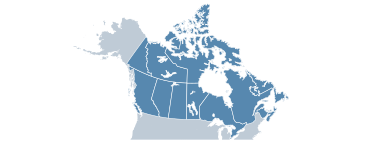
Pathways to Work refers to programs by the names used in study reports or manuscripts. Some program names may use language that is not consistent with our style guide, preferences, or the terminology we use to describe populations.