Share this program

Summary

Head Start provided free childcare, preschool, and related services to families with low income with the aim of increasing children's school readiness and supporting parental well-being. 

Head Start provided free childcare, preschool, and related services to families with low incomes with the aim of increasing children's school readiness and supporting parental well-being. The program provided home and center based care and education as well as wellness visits, parenting classes, and networking opportunities. Head Start also served as a bridge to additional public services such as health care, nutrition, and housing assistance. 

The program targeted families living at or below the federal poverty thresholds with children aged three to four. The program was implemented nationally across the United States. 

Populations and employment barriers: Parents

Effectiveness ratings

  • Well- supported
  • Supported
  • Mixed support
  • Not supported
  • Insufficient evidence
  • Cannot assess support

Studies of this program

Study quality rating Study counts per rating
Low Low 1

Implementation details

Organizations implementing program

Local Head Start providers

Local context

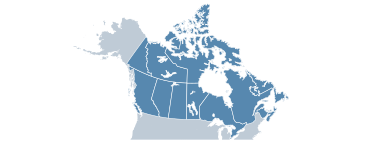
The study was conducted in 23 states and Puerto Rico with a nationally representative sample of 383 Head Start centers across all Head Start regions.

Characteristics of research participants
Black or African American
30%
White
33%
Hispanic or Latino of any race
38%

Pathways to Work refers to programs by the names used in study reports or manuscripts. Some program names may use language that is not consistent with our style guide, preferences, or the terminology we use to describe populations.