




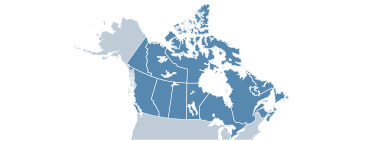
ATIM case managers helped participants develop training plans to help them achieve their employment and career advancement goals. ATIM provided access to trainings, including basic skills training, occupational training focused on manufacturing and safety, and on-the-job training. Manufacturing safety training modules lasted 1 to 12 weeks, and participants could receive on-the-job training during internships lasting about 3 to 4 weeks. On average, participants completed the program in five months. Applicants were eligible to participate in the program if they were eligible for the Workforce Investment Act Adult or Dislocated Worker Programs, had reading and math proficiency at or above the 6th-grade level, had English proficiency, and passed a drug screening test. People were prioritized for placement in the program if they met the following criteria: had reading scores at or above the 10th-grade level and math scores at or above the 9th-grade level, had interest in the National Occupational Competency Testing Institute assessment, and agreed to undergo a background check. The program took place in five regions in Illinois.
Summary
Accelerated Training for Illinois Manufacturing (ATIM) provided training to workers who were eligible for the Workforce Investment Act Adult or Dislocated Worker Programs to prepare them for employment in manufacturing jobs.
Effectiveness rating and effect by outcome domain
View table definitionsScroll to the right to view the rest of the table columns
| Outcome domain | Term | Effectiveness rating | Effect in 2024 dollars and percentages | Effect in standard deviations | Sample size |
|---|---|---|---|---|---|
| Increase earnings | Short-term |  |
|||
| Long-term | |
||||
| Very long-term | |
||||
| Increase employment | Short-term | |
|||
| Long-term | |
||||
| Very long-term | |
||||
| Decrease benefit receipt | Short-term | |
|||
| Long-term | |
||||
| Very long-term | |
||||
| Increase education and training | All measurement periods | 
|
0% (in percentage points) | 0.000 | 0 |
Studies of this program
| Study quality rating | Study counts per rating |
|---|---|
 High |
1 |
Program cost
No cost information available.
Cost results
| Estimate (in 2024 dollars) | Quality of cost analysis that produced the estimate | |
|---|---|---|
| Total program cost, per participant | $13,026 |
Interpret cost findings with caution
|
| Cost per program outcome | $2,477 per additional week of employment in the past year, two-year follow-up |
Interpret cost findings with caution
|

Cost information
How much did the program cost per participant?
The average total program cost per participant was $13,026 in 2024 dollars. This figure is based on cost information for this program reported in one cost study reviewed by Pathways to Work (for details, see the FAQ). This study received a rating of Interpret cost findings with caution for the cost analysis.
How much did the program cost relative to its effects on participant outcomes?
A cost-effectiveness analysis was conducted in the cost study reviewed, receiving a rating of Interpret cost findings with caution. This study estimated a cost of $2,477 in 2024 dollars per additional week of employment in the past 12 months based on a two-year follow-up survey. This means that, relative to the comparison group, each additional week of employment in the past 12 months due to the program cost $2,477. This study also estimated a cost of $177 per $100 increase in annual earnings in 2024 dollars based on a two-year follow-up survey.
Cost information is not directly comparable across programs due to differences in the categories of costs reported and program length. Cost information is not an official price tag or guarantee.
Implementation details
State(s) where implemented
Pathways to Work refers to programs by the names used in study reports or manuscripts. Some program names may use language that is not consistent with our style guide, preferences, or the terminology we use to describe populations.