




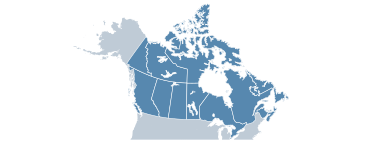
Between 1994 and 1998, MTO offered housing vouchers to families with low incomes who lived in public housing or private assisted housing projects in high-poverty neighborhoods and who had at least one child younger than 18. Private assisted housing projects are rental housing built by private owners through federal programs that required them to price some units to be affordable to people with low incomes. The vouchers subsidized the cost of renting private housing in low-poverty neighborhoods. Program participants also received counseling services and special assistance from local nonprofit counseling agencies to help them find and lease eligible private rental units. The program required families to use their voucher in low-poverty areas for one year, after which families could use their voucher to relocate without geographical restriction for up to 4 years. Participants were required to observe Section 8 housing voucher policies that limited the amount of time voucher recipients had to secure housing to 90 days, required voucher recipients to contribute 30 percent of their adjusted income to rent, and prohibited illegal drug use or alcohol abuse. The program was conducted in Baltimore, Boston, Chicago, Los Angeles, and New York City.
Summary
The MTO Housing Vouchers for Use in Low-Poverty Neighborhoods Plus Mobility Counseling program provided housing vouchers and counseling services to help families with low incomes and at least one child younger than 18 find and lease private rental housing in low-poverty neighborhoods. The program was intended to support family well-being, defined in terms of the following characteristics: (1) mobility, housing, and neighborhood quality; (2) adult and child physical and mental health; (3) child educational achievement; (4) youth delinquency and risky behavior; (5) adult and youth employment and earnings, and (6) household income and public assistance receipt.
Effectiveness rating and effect by outcome domain
View table definitionsScroll to the right to view the rest of the table columns
| Outcome domain | Term | Effectiveness rating | Effect in 2024 dollars and percentages | Effect in standard deviations | Sample size |
|---|---|---|---|---|---|
| Increase earnings | Short-term |  |
|||
| Long-term | |
||||
| Very long-term | 
|
 $838 per year
|
0.023 | 2493 | |
| Increase employment | Short-term | |
|||
| Long-term | |
||||
| Very long-term |
|
 -1% (in percentage points)
|
-0.020 | 2610 | |
| Decrease benefit receipt | Short-term | |
|||
| Long-term | |
||||
| Very long-term |
|
$76 per year
|
0.022 | 2595 | |
| Increase education and training | All measurement periods | |
Studies of this program
| Study quality rating | Study counts per rating |
|---|---|
 High High
|
1 |
Implementation details
State(s) where implemented
Pathways to Work refers to programs by the names used in study reports or manuscripts. Some program names may use language that is not consistent with our style guide, preferences, or the terminology we use to describe populations.