




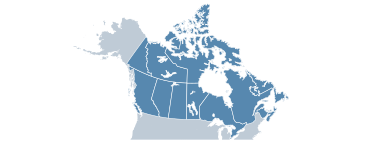
ICM provided participants with case managers who identified barriers to entry into substance use disorder treatment, such as childcare, transportation, and housing problems, and addressed those barriers. While participants were in treatment, case managers met with them weekly and coordinated with treatment facility staff to provide other needed services. Participants received vouchers for items such as children's toys or cosmetics as an incentive to participate in treatment. Participants received case management services for 24 months. The program focused on women who were receiving TANF and screened positively for substance dependence. The program took place in Essex County, NJ.
Summary
The ICM program provided case management services and participation incentives to women who were experiencing substance dependence. The program intended to support participation in substance use disorder treatment and ultimately improve employment outcomes.
Populations and employment barriers: Public benefits recipients, Cash assistance recipients, Substance use disorder
Effectiveness rating and effect by outcome domain
View table definitionsScroll to the right to view the rest of the table columns
| Outcome domain | Term | Effectiveness rating | Effect in 2024 dollars and percentages | Effect in standard deviations | Sample size |
|---|---|---|---|---|---|
| Increase earnings | Short-term |  |
|||
| Long-term | |
||||
| Very long-term | |
||||
| Increase employment | Short-term | |
|||
| Long-term | 
|
0% (in percentage points) | 0.000 | 0 | |
| Very long-term | |
||||
| Decrease benefit receipt | Short-term | |
|||
| Long-term | |
||||
| Very long-term | |
||||
| Increase education and training | All measurement periods | |
Studies of this program
| Study quality rating | Study counts per rating |
|---|---|
 High High
|
1 |
Implementation details
State(s) where implemented
Pathways to Work refers to programs by the names used in study reports or manuscripts. Some program names may use language that is not consistent with our style guide, preferences, or the terminology we use to describe populations.